Ottava Records
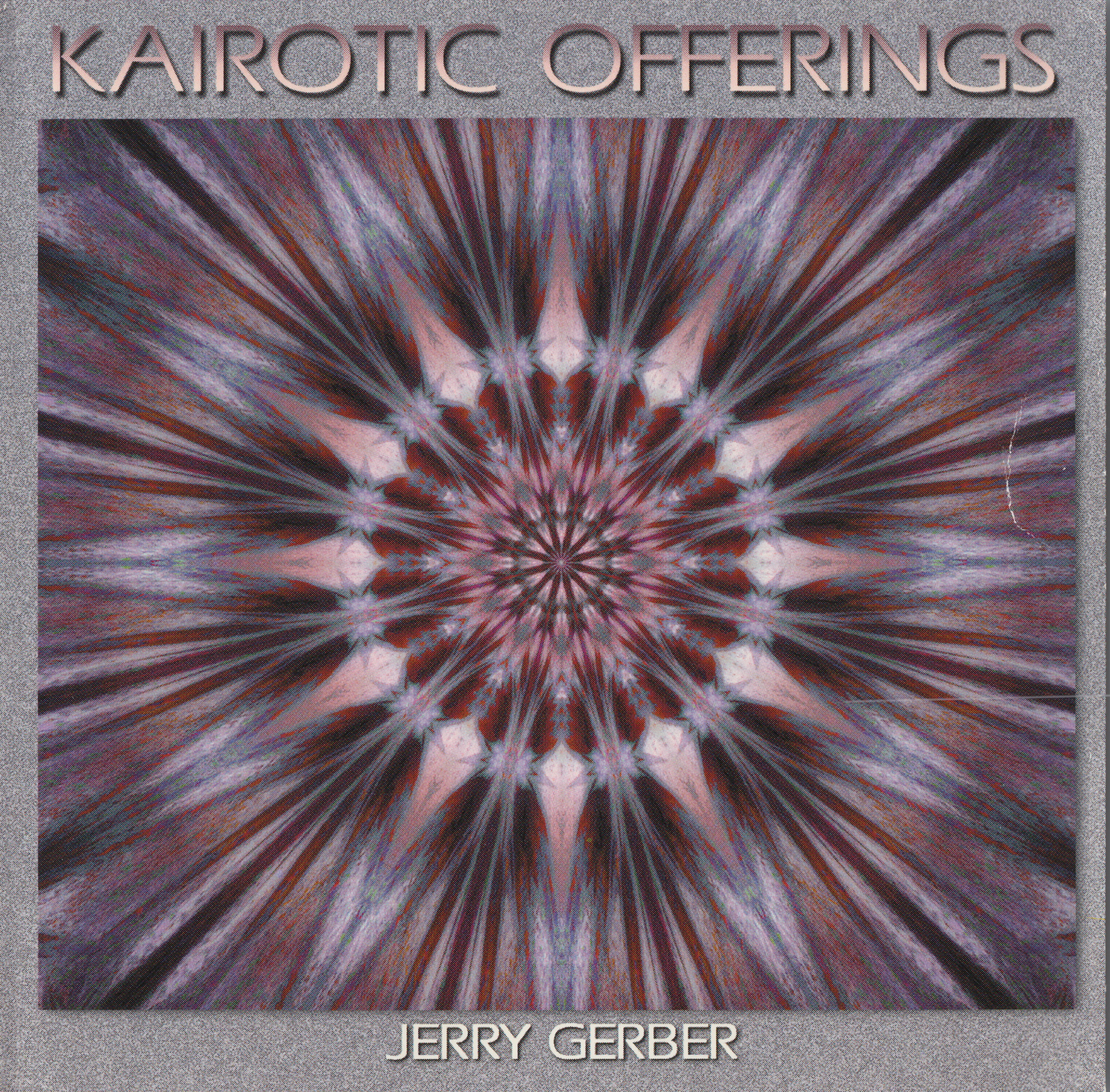
Kairotic Offerings


Ottava 97-002  

This compact disc features Symphony #1 (1992-95), my Flute Concerto (1989) and a new Violin Concerto (1996). There is over an hour's worth of music on the CD. The featured soloists are Tim Day (flute) and Karen Bentley (violin).

Buy the CD


Independent review of Kairotic Offerings (from 20th Century Music, June 1998)


The Greeks had two words for time: Chronos and Kairos. Chronos, or clock time, is the time we base much of our life on, it is most evidently expressed in our standard of the nine to five workweek, as well as in the twelve month year and the 24-hour day. Kairos, on the other hand, is a subjective sense of time, it is the kind of time the composer works with; it is the time we experience while gardening, falling in love, or involved in some creative activity. It is this sense of time which has inspired the title of this compact disk.

The Symphony is a four-movement work composed during a difficult period in my life. The Promethean Denial, a restless and moody movement, was inspired by the idea that while Prometheus gave man fire, it is possible for a human to thwart this fire (the creative impulse toward self-realization) and deny the richness and depth of the inner life by focusing too much on outward and material goals. The first movement utilizes one primary theme and several secondary themes and travels through A-flat minor via minor-third harmonies while eventually culminating in E-flat major over a twelve minute period. The second movement takes the primary theme of the first movement, utilizing different rhythmic patterns and metric stresses, and develops into a robust and lively experience. It is quite "American" in feeling and becomes relentless in its rhythmic and harmonic drive toward G-major. The third movement makes use of low, expansive synthesizer timbres and a short two note motive in 7/4. With little in the way of dramatic tension, this movement is meant to be more of a meditation, an emptying of the mind if you will, and ends by fading off into nothingness. The fourth and final movement grabs a short theme played by the bassoon and flute from the third movement and quickly develops into a complex structure while making use of three themes, each involving its own development and variation. Ending in a pastoral song-like style, Mysteries expresses the idea that some victories in life are subtle.

I composed the Flute Concerto in 1989 in response to a flautist’s request that I write a piece for the New American Music Festival in Sacramento. The piece also satisfied a desire to compose a concert work utilizing new music technologies, as I had grown weary of composing soundtracks for film and animation, and wanted to resume writing music for music's sake. The first movement is an expression of urban living in our rapidly changing global society, hence the name Urbanity. It utilizes a modality in which there are three themes: The first is a rhythmic motif introduced and maintained by the synthesized brass, the second theme is melodic and is heard throughout by the solo flute, sampled strings and woodwinds, and the third idea is a four-note cell heard by the sampled violas. The primary tonal centers in this movement are F and C#. The second movement, The Students of China, is a simple expression of sorrow over the brutal human rights violations which occurred in June 1989 in Beijing. This movement is mono-thematic and works its way from A-minor through C-minor to B-flat minor and back to A-minor. The last movement, Psychoplexes, is neither inspired by or suggestive of non-musical references. An orchestral tutti states a theme which introduces a flute melody. This melody, derived from the chromatic scale, is worked out polyphonically in the octatonic mode and leads to a restatement of the introductory thematic material which is then heard in a more tonal setting. A triplet rhythm is introduced in which chromaticism gives way to shifting tonalities and a third tutti utilizing the introductory theme announces a brief atonal section of the movement. Previously heard material is then reorganized and developed.

My Violin Concerto was written in 1996 and explores different musical textures in its three movements. The first movement, Romance, is in a kind of post neo-romantic style with the violin sounding a touch melancholy and wistful. The opening theme moves harmonically between C-lydian, and E-minor, then branching out into more remote key areas, and making its final cadence on E-major. The second movement makes use of exotic synthesizer timbres and textures and uses, for the most part, non-western scales to create an almost middle eastern sound, hence the name Trance. The third movement is a virtuoso piece which takes a primary theme and develops it, with each successive statement being more ornate than the preceding one, and played against the same orchestral accompaniment each time. Farewell to Vilnius takes on a decidedly Slavic character.

Jerry Gerber

San Francisco, February 1997         


Buy the CD


home | news | recordings | compositions | services | instruction | articles | studio | biography | credits | links